
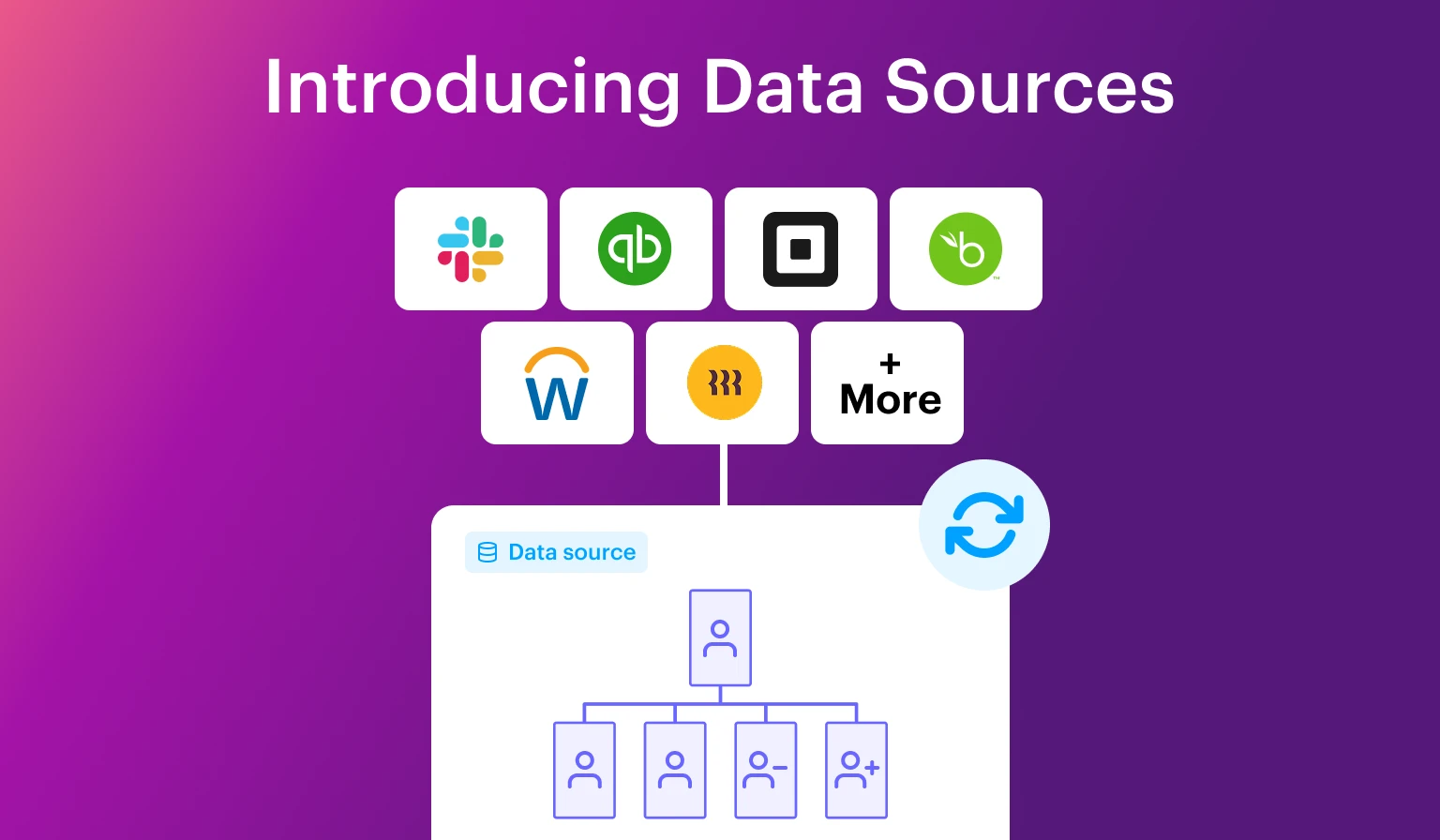
Start with the current organization
An organization chart is most useful when it reflects the work people actually do. Bring roles, teams and reporting relationships into one view before proposing a new structure.
Review gaps with the people closest to the work. A shared baseline makes the next conversation more specific: what should change, who is affected, and what information is still missing?
Make ownership explicit
Good data needs a clear owner. Decide who maintains role information, approves reporting changes and checks the quality of imported records.
A useful structure connects people to responsibilities, not just boxes to lines.
Agree on a small set of rules before connecting systems. Consistent naming and review steps reduce ambiguity when the organization changes.
Explore a scenario before committing
Use the baseline to compare an alternative. Keep the business question narrow: how would a proposed team structure change accountability or collaboration?
- Define the decision and the constraints.
- Compare the proposed structure with the current one.
- Record the assumptions that need review.
Keep the picture useful
Organization design is an ongoing practice. Set a regular review cadence and make updates part of the operating process, so the chart remains a tool for decisions rather than a snapshot that quickly loses relevance.